
Adapted from an article by Dr. Judy Morgan, DVM. Read her full article, with sources, at drjudymorgan.com.
We talk a lot about getting dogs to drink enough. Dr. Judy Morgan, a veterinarian with more than 35 years in practice, asks a different question: what is actually in the water they drink? Her answer is that most of us have never checked.
Tap water isn’t automatically safe
Municipal water is treated, but treatment leaves byproducts behind, and pipes and the ground add more. Dr. Judy points to a 2022 veterinary study that linked higher levels of disinfection byproducts in tap water to bladder cancer in dogs, and to Environmental Working Group testing that has found hundreds of contaminants in U.S. tap water. The list includes “forever chemicals” (PFAS), heavy metals, nitrates from farm runoff and industrial solvents. Private wells aren’t regulated at all, and water that looks, smells and tastes fine can still carry lead, bacteria or arsenic.
Find out what’s in yours
- Enter your ZIP code in the EWG Tap Water Database for a report on your local supply.
- Ask your water utility for its annual water quality report, which lists what was detected and at what levels.
- On a well, have the water tested by a laboratory: it is the only way to know.
Filter it, and keep the minerals
Dr. Judy’s advice is to filter the water the whole household drinks, and to choose a filter for the contaminants your report actually shows. A countertop filter is the budget option, but performance varies widely between brands. Reverse osmosis removes the most, though it wastes water and strips out minerals, so she suggests a system that adds minerals back. She is cautious about distilled water for long-term use for the same reason, and notes that bottled water can carry microplastics from the bottle.
If your dog eats a fresh, high-moisture diet and still forms urinary crystals, she suggests testing the pH of your water with simple test strips. Water pH can affect urine pH.
What it means at the dog park
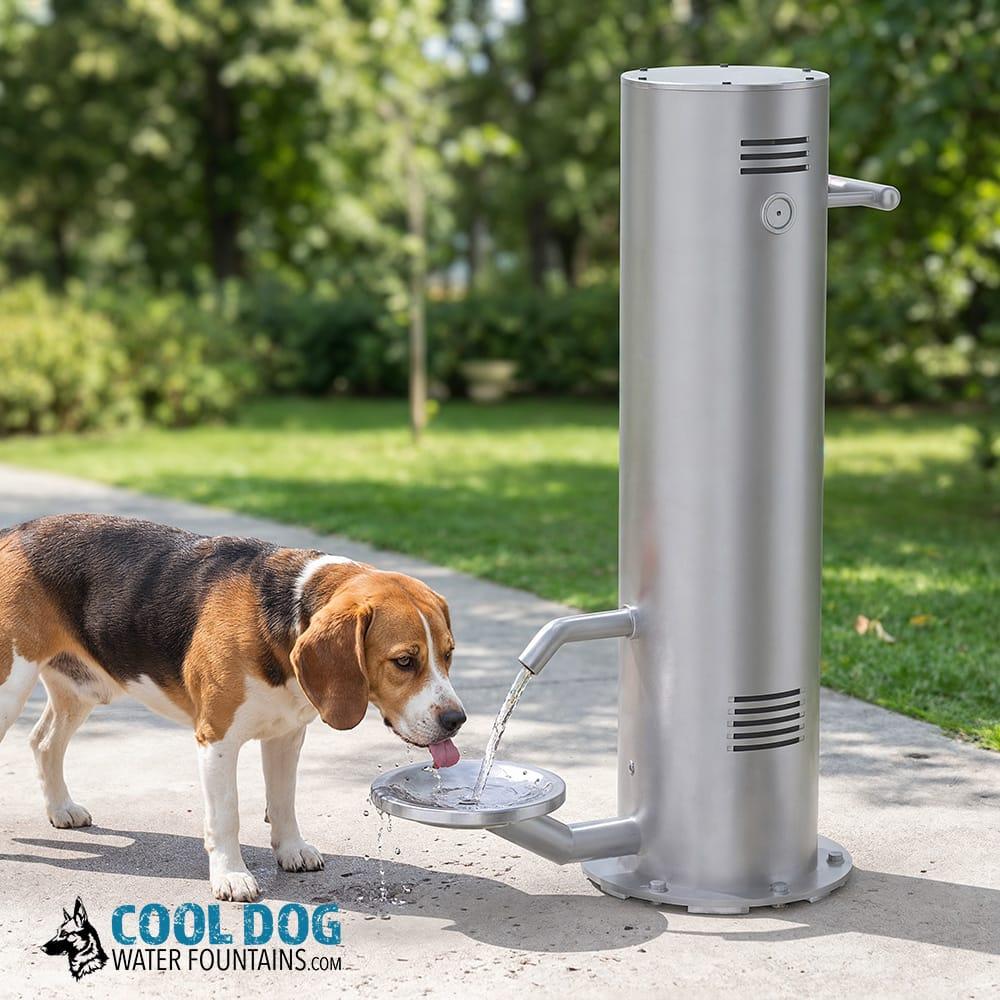
Most of us can’t filter the water at a public park. We can make sure what comes out of the tap is as fresh as possible. A push-button fountain serves water straight from the line, with no basin for it to sit in and no bowl shared all day. At home, a clean stainless bowl such as our Medical-Grade Water Bowl, washed daily, does the same job.
This post is for information only and isn’t a substitute for advice from your own veterinarian.